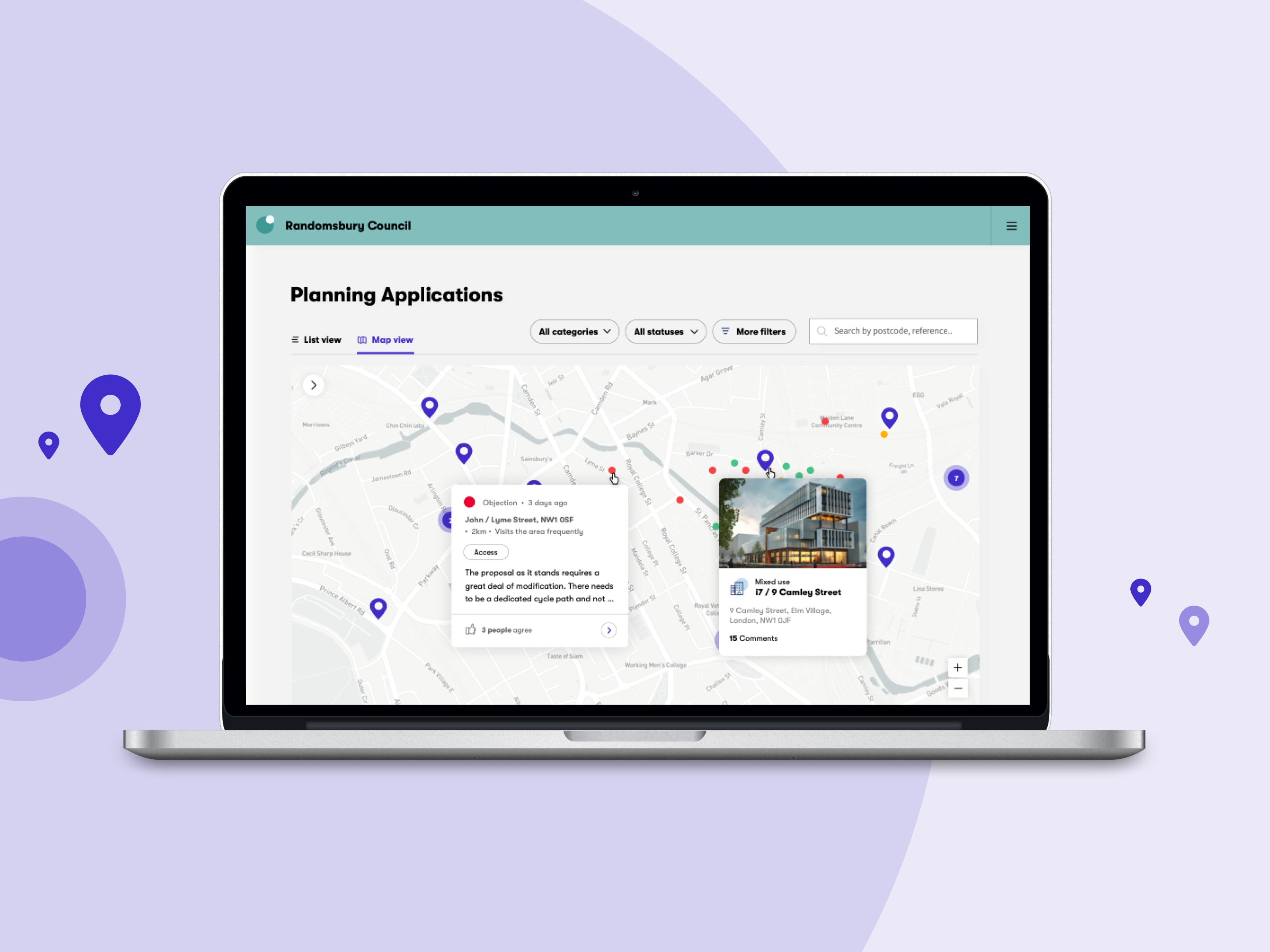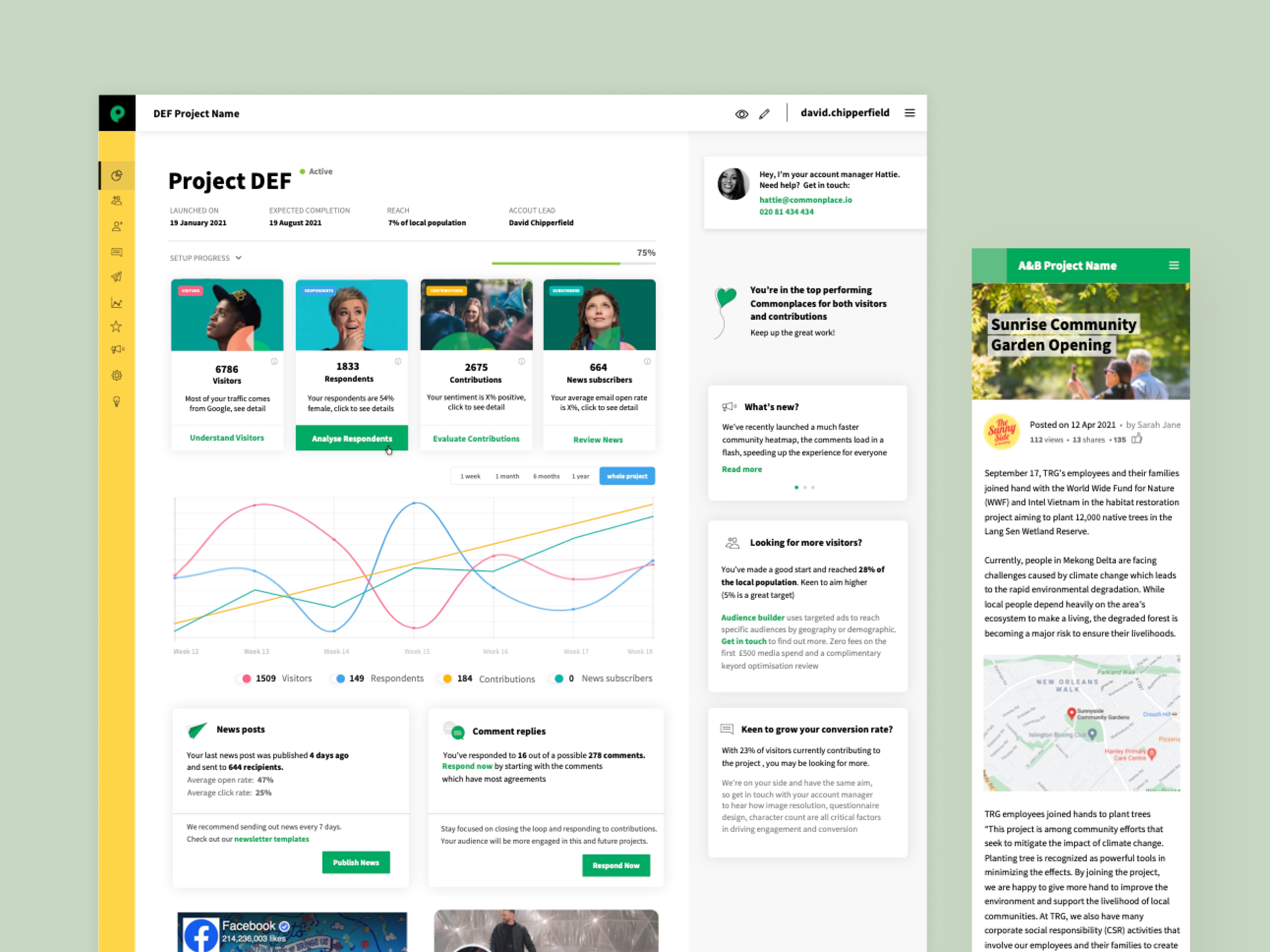
CommonplaceCitizen engagement platform
Public consultation platform connecting people, places and project data
Civic Tech

Design Systems
Building and scaling component libraries and design systems across multiple products
and technology phases for one organisation – from an Angular-based component library,
through a Material 3 foundation, to a modern shadcn/ui-based approach

Across several years, I worked on design-system initiatives for one organisation as its digital products, teams and technology stack evolved. The work moved through three stages:
an Angular-based component library, a Material 3-based product system,
and later a more flexible shadcn/ui-based approach.
The organisation needed consistency across products built at different times, by different teams and with different front-end foundations. The challenge was to keep interfaces coherent while allowing product teams enough flexibility to move quickly, solve specific needs and evolve their tools without being constrained by one rigid system.

Create consistency
across a growing product suite

Scale a shared language
across an environment of products

Enable faster,
more flexible product delivery
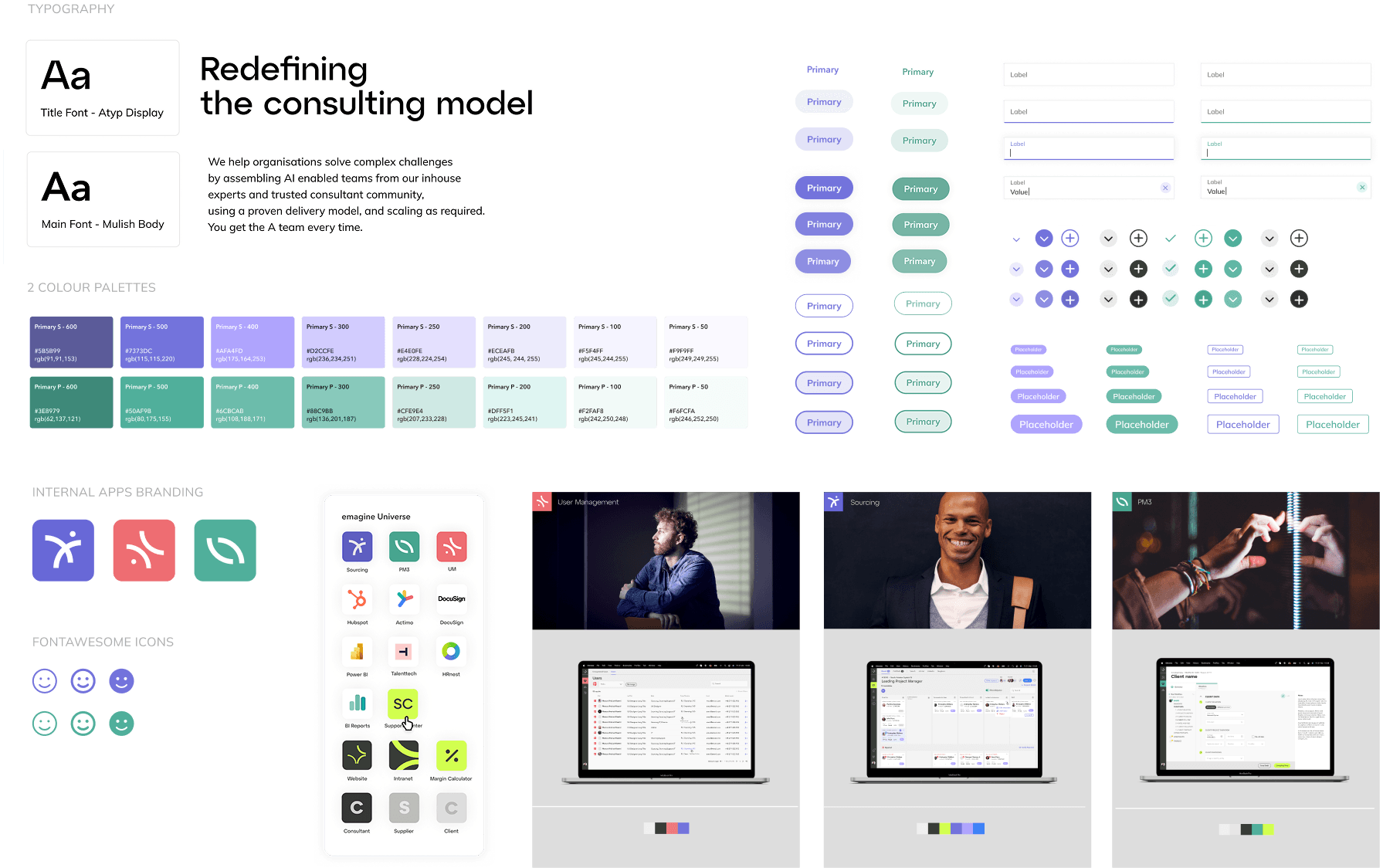
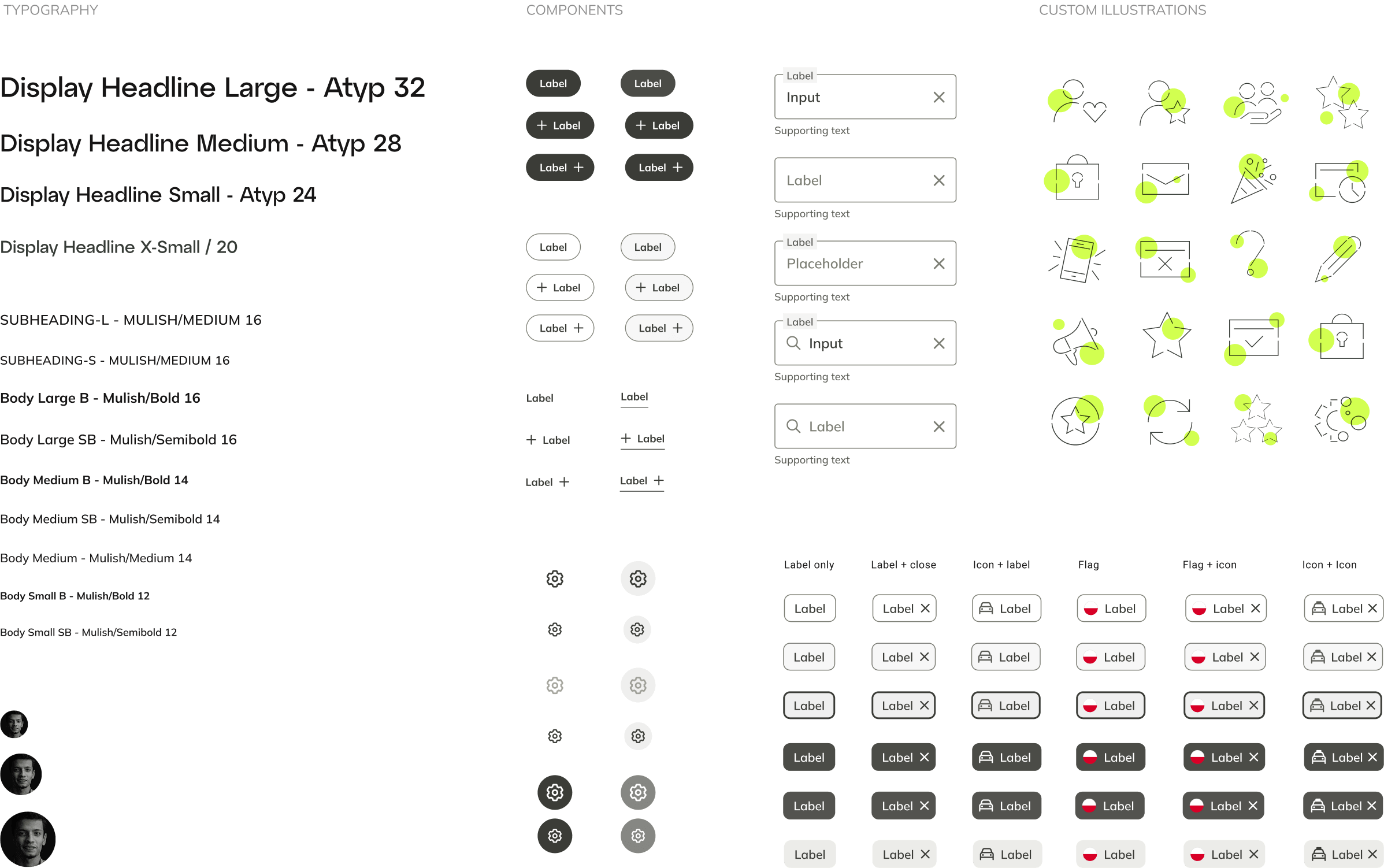
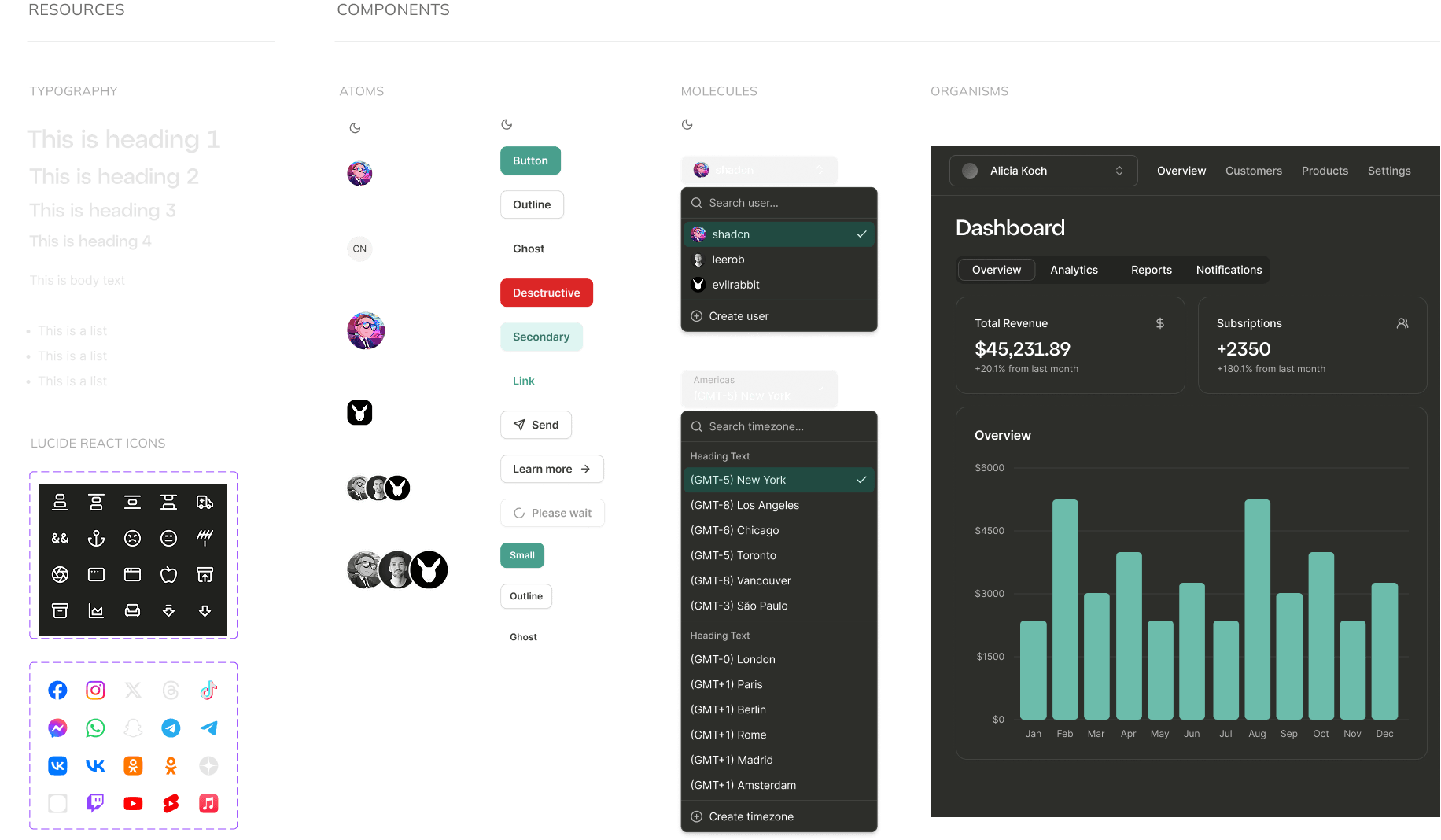
I worked across three generations of the design system, defining reusable components, interaction patterns, visual foundations and documentation. My role connected design decisions with implementation realities, helping reduce duplication, support faster delivery and create a shared language between product design and development teams.
The design system evolved from a framework-specific component library into a scalable product foundation, and later into a more flexible component approach suited to modern, fast-moving product teams. It created stronger consistency across the organisation while making the system easier to adapt as products, teams and technologies changed.

I’m a Senior Product Designer with over ten years' experience crafting digital products in regulated, complex domains, including leading product design teams and complex initiatives from product architecture through delivery.
I specialise in data-heavy applications, design systems and mobile experiences — areas where the challenge is not just how something looks, but how it holds together under real conditions.
Outside product design, I keep coming back to photography, architecture,
book design and typography - disciplines that continue to shape
how I think about structure, composition and detail.
I work end-to-end - from framing product problems and setting design direction to structuring complex flows, prototyping, interface design and design systems.
Depending on the project, I work both as a hands-on product designer and as a design lead, aligning designers around a shared direction while staying close to users, product, engineering and implementation. I use research, rapid prototyping and AI-assisted workflows
to explore, test and refine solutions.
I’m available for freelance projects,
full-time roles, and collaborations